Loading...
Serving San Benito, TX and surrounding areas. (956) 695-0853
Cracking structures, leaning posts, and shifting walls often trace back to inadequate footings. We dig, reinforce, permit, and pour footings sized for San Benito clay soils so everything built on top stays where you put it.
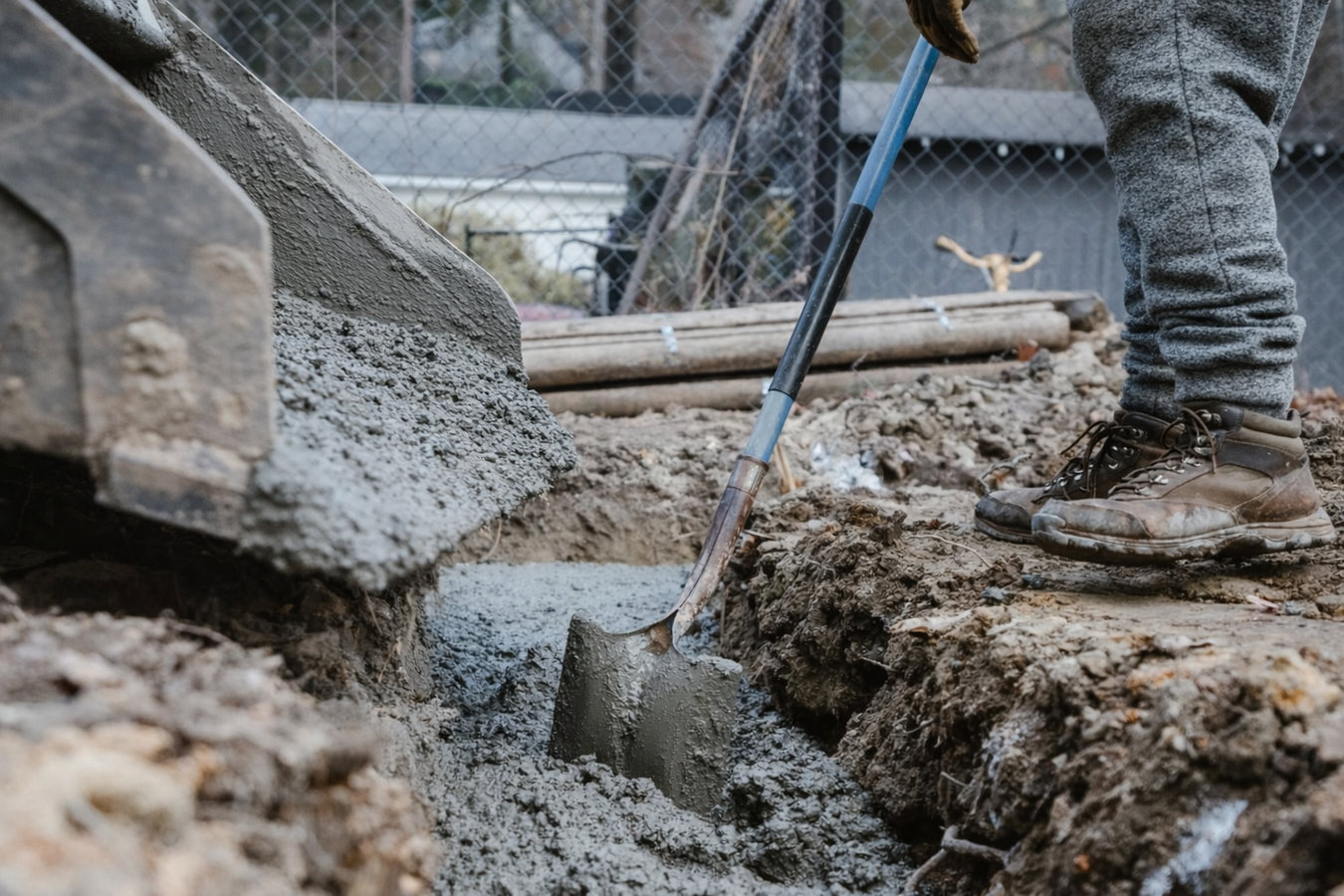
Concrete footings in San Benito are the underground base that carries the weight of a structure - a room addition, a porch, a carport, a fence, or a deck - and spreads that load safely into the ground. The work involves digging to the required depth, placing steel reinforcing bars inside forms or a trench, and pouring ready-mixed concrete. Straightforward residential footings can often be poured in a single day, with several days of curing before loads are placed on top.
In San Benito, footings matter more than most places. The heavy clay soils across the Rio Grande Valley expand when wet and shrink when dry, a cycle that repeats every season. A footing that does not reach below the active clay zone moves with the soil, and the structure above it moves too - showing up as cracked walls, sticking doors, and structures that slowly lean. Getting the footing depth and reinforcement right the first time is almost always cheaper than repairing what goes wrong above it later.
Many footing projects are part of a larger build. If your project includes a new concrete slab on top of the footings, our foundation installation service covers the full slab pour once footings are inspected and approved.
Room additions, covered patios, detached garages, carports, and new fences all require footings in San Benito's clay soil. Skipping or undersizing them is one of the most common reasons new structures fail within a few years of being built in this region.
Diagonal cracks from the corners of openings, doors that suddenly stick or no longer latch, and walls pulling away from the ceiling are signs that something is moving at the foundation level. In South Texas, this kind of movement is frequently tied to clay soil reacting to wet and dry seasons.
If a fence, porch column, deck post, or outbuilding is visibly leaning or has dropped on one side, the footing below it has likely failed or was never adequate for the soil conditions here. This is a safety concern, not just a cosmetic one, and it gets worse over time without intervention.
If you have already patched a crack or shimmed a post and the same problem returned within a season, the original footing likely was not addressed. Repairing above-ground damage without fixing the footing underneath is like painting over a water stain without stopping the leak - it only delays the next call.
We handle the complete footing process from site visit through the curing period. That includes assessing the soil at your specific site, determining the required depth to reach stable ground below the active clay zone, pulling the city building permit, scheduling and coordinating the required footing inspection before any concrete is poured, placing the steel reinforcing bars to the correct specification, and managing the pour with the heat in mind. For clients who also need foundation raising as part of addressing an existing structure, we coordinate both scopes so the work is sequenced correctly.
After the concrete is poured and curing, we also coordinate the next phase of your project - whether that is framing, block work, or the concrete slab that sits on top. If your project involves a full foundation pour, our foundation installation service picks up directly where the footing work leaves off. We keep the scope integrated so you are not managing two separate contractors for a single project.
Designed for the load of added living space, accounting for the clay soil movement common in Cameron County.
Suited to deck posts, porch columns, carport supports, and fence posts that need a stable anchor in reactive soil.
For detached garages, sheds, and outbuildings that need a continuous base around the perimeter before walls go up.
For existing structures where a failed footing is driving ongoing cracking or movement above ground.
San Benito sits in Cameron County on soil that is among the most active in the country. The clay expands measurably when saturated by the Gulf-fed storms that roll through the area in late summer, then shrinks again during dry stretches. That movement is cyclical and predictable - and a footing that does not account for it will move. San Benito also has no meaningful frost depth, so unlike most of the country, the depth requirement here is driven entirely by how deep to go to reach soil that does not participate in that wet-dry cycle. That number is not a generic formula - it depends on what is at your specific site, which is why we visit before we quote.
The mild winters that make San Benito pleasant year-round also mean footing work can happen in any month, which helps project timelines. Summer requires care during the pour because extreme heat can cause concrete to lose moisture too quickly and lose strength. We serve clients throughout the area, including homeowners in Harlingen who face the same clay soil conditions, and clients in Brownsville where coastal proximity adds humidity and moisture to the curing environment. Our approach to depth, reinforcement, and pour scheduling is calibrated for where you actually are, not a generic Texas average.
Call or send us your project details and we respond within one business day. We visit the site before quoting - a phone number for footing work is rarely reliable because soil conditions and load requirements vary too much. The site visit takes 30 to 60 minutes.
We assess the soil, confirm the required depth, and determine the correct steel reinforcement for your structure and load. If a building permit is required - and for most permanent structures it is - we handle the application before any digging starts.
The crew digs to the specified depth, sets the forms, and places the reinforcing steel. The city inspector visits before the pour to verify depth and steel placement. This inspection step protects you - it is an independent confirmation that what is underground is correct.
We schedule the concrete pour for early morning during hot months and use a mix suited to the weather. Once the concrete has cured to the required strength, we confirm the wait time with you and coordinate the next phase of your project.
We visit your site, assess the soil, and give you a written estimate that specifies depth, steel, and what is included - no guessing.
(956) 695-0853We work on the expansive clay soils of the Rio Grande Valley regularly and know how deep and wide footings need to be to stay stable through the wet-dry cycles that are part of every South Texas year. This is not a generic calculation - it reflects what we have seen on actual Valley sites.
We handle the building permit and coordinate the city inspection that must happen before the concrete is poured. That inspection is not an obstacle - it is confirmation that the depth and steel are correct while they can still be adjusted. The Texas Department of Licensing and Regulation requires licensed contractors for this type of construction work - we are compliant and can show you our credentials.
We place reinforcing steel to the correct specification and show you - and the inspector - that it is in position before any concrete goes in. A footing poured without adequate steel may look fine for years before cracking and shifting under the load and soil movement it was not designed to handle.
Your estimate specifies footing dimensions, depth, steel type and placement, and concrete mix strength so you can compare bids on equal terms. Vague lump-sum quotes that omit these details make it impossible to know whether two contractors are offering the same scope of work.
Footings are invisible once the job is done, which is why contractors who cut corners on them are rarely caught until years later. We document the work with the permit record and inspection sign-off, so you have proof that what is underground is correct - a record that carries real value when you go to sell the property.
When an existing foundation has shifted due to soil movement, foundation raising corrects the level before additional footing or slab work begins.
Learn MoreOnce footings are poured and inspected, a new slab foundation can be installed on top to complete the base for your addition or new structure.
Learn MoreThe longer a cracking structure sits without a proper footing underneath it, the more expensive the repair above it gets - call now and get it on the schedule.