Loading...
Serving San Benito, TX and surrounding areas. (956) 695-0853
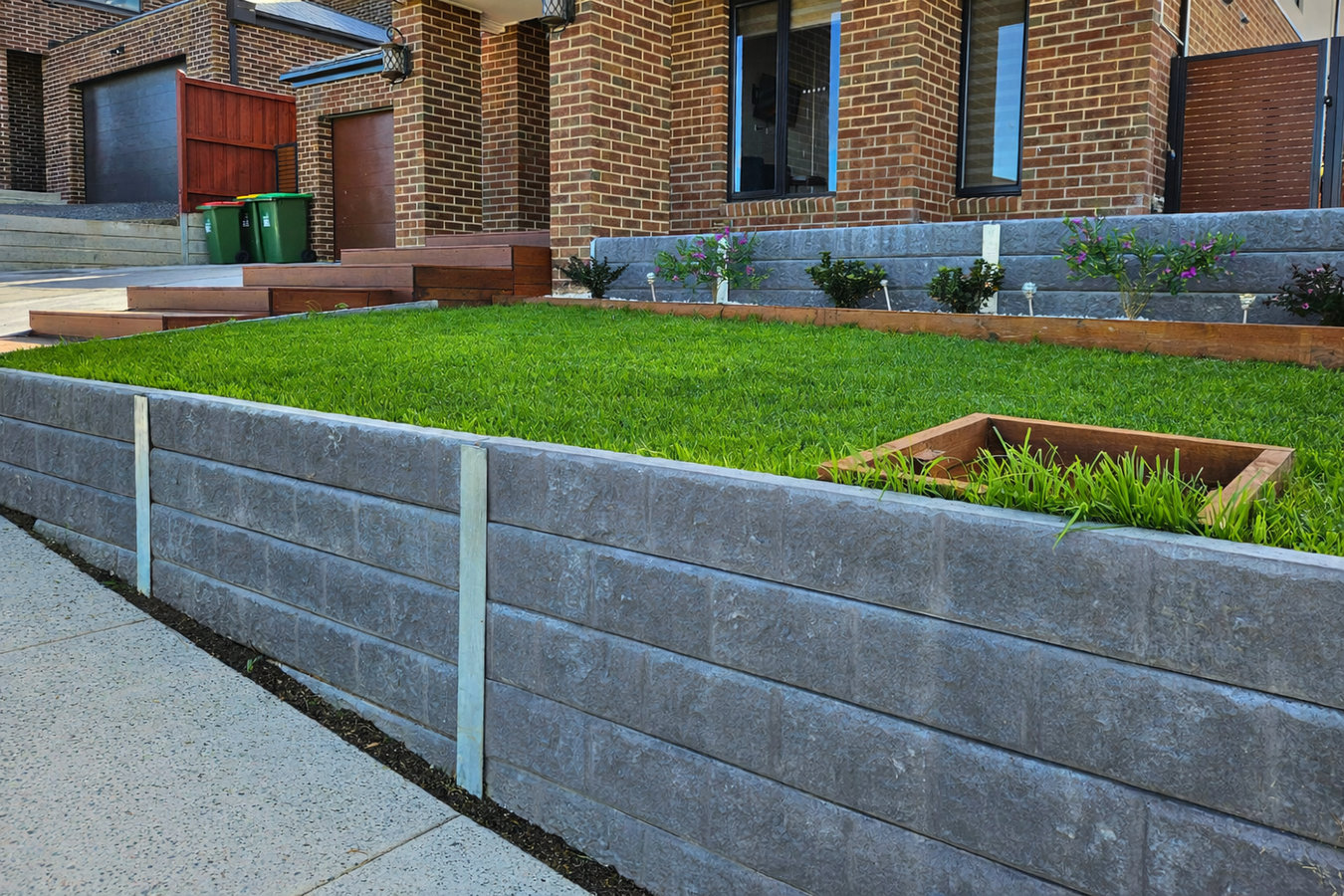
Clay soil and heavy rains are taking your slope. A properly built retaining wall holds the ground in place and turns wasted hillside into flat, functional outdoor space.
Concrete retaining walls in San Benito hold back soil that would otherwise slide, slump, or erode, creating a stable boundary between two ground levels - most jobs run a few days to a week from excavation to backfill, depending on wall length and height.
If your yard has a slope that loses soil after every rain or a hillside that makes half your outdoor space unusable, a concrete retaining wall solves both problems at once. San Benito homeowners deal with heavy clay soils that swell and shift with the seasons - that constant movement is why walls built here need deeper footings and better drainage than walls in sandier regions.
Many homeowners find that a retaining wall also works alongside other concrete improvements. If you are planning a concrete floor installation on a patio or covered slab nearby, getting both projects planned together can simplify grading and drainage across the entire area.
Visible bare soil washing away after rain, ruts forming on a hillside, or mulch migrating down toward your foundation are all signs your slope is unstable. In the Valley, a single heavy storm can take a significant amount of soil off an unprotected slope. Each rain that passes without a wall in place makes the problem harder to fix.
A retaining wall that has started to tilt forward or shows horizontal cracks near its base is under stress it was not designed to handle. This is a safety concern, not just cosmetic - a failing wall can collapse suddenly. If you notice these signs, have a contractor assess it before the next rainy season.
If rainwater consistently collects near your home's foundation rather than draining away, a slope or grade problem may be directing it there. A retaining wall combined with proper grading can redirect that water. In San Benito's heavy-rain climate, foundation moisture is a serious long-term concern that only gets more expensive to address over time.
A yard that drops sharply from one level to another is hard to mow, hard to landscape, and essentially unusable as outdoor living space. A retaining wall creates flat, usable terraces from that wasted slope - turning a frustrating hillside into a patio, garden, or play area you can actually enjoy.
We build both poured concrete walls and concrete block (CMU) walls, and we recommend the right type based on your wall height, soil conditions, and site access. For most residential projects in San Benito, both options produce a durable result when they include a properly designed drainage layer. The work behind the wall - the gravel backfill, the drainage outlets, the depth of the footing - matters just as much as the wall material itself. We also handle concrete footings when a project calls for them as a separate structural element.
Every retaining wall we build includes a written drainage plan before work begins. For walls that require permits in Cameron County or the City of San Benito, we handle the application so you are not navigating that process on your own. Once the wall is complete, the compacted backfill and stable grade create a clean foundation for any landscaping, paving, or outdoor living improvements you want to add next.
Best for taller walls or heavily loaded applications where a single monolithic structure is the strongest option.
Ideal for irregular terrain or tight spaces where flexibility in construction is needed, reinforced with steel and concrete fill.
Every wall we build includes proper gravel backfill and drainage outlets - the work behind the wall that determines how long it lasts.
For walls requiring Cameron County or City of San Benito permits, we handle the application so you don't have to.
The Rio Grande Valley sits on some of the most expansive clay soils in Texas. That clay swells when it rains and shrinks when it dries out, and it does that cycle every single year. For a retaining wall in San Benito, that means the lateral pressure on the wall changes constantly - a wall built without accounting for that movement will bow or crack within a few years. We design footings deeper than generic standards call for because local soil conditions demand it. Many properties near the resacas that wind through the city also have persistently wet ground, which adds even more pressure on any wall that is not properly drained.
Intense rainfall from Gulf storms and summer thunderstorms is a fact of life here. When several inches fall quickly and the ground is already saturated, a slope without a wall loses material fast. We serve homeowners throughout the area - from neighborhoods in Harlingen dealing with drainage challenges after big rains to properties in Los Fresnos where older slopes have been eroding season after season. Building for this specific climate is what separates a wall that holds from one that leans within a decade.
Describe your slope, the approximate wall length and height, and any drainage concerns you have noticed. We respond within one business day and never quote over the phone without seeing the site first.
We visit your property to assess the slope, soil type, and drainage situation. We determine footing depth, reinforcement needs, and flag any permit requirements - all included in a written estimate at no charge.
If your wall requires a permit, we handle the application with the City of San Benito or Cameron County. Once approved, we excavate to stable soil and prepare the footing - the most critical step for a wall that stands for decades.
The wall goes up, gravel drainage backfill is installed, and soil is backfilled in compacted layers. After curing, we walk the finished project with you to confirm everything matches the plan.
Free written estimate - no pressure, no obligation. We visit your site and give you a clear quote with a drainage plan included.
(956) 695-0853The expansive clay soils common throughout Cameron County push harder against a retaining wall than sandy or loamy soils. We design every wall with deeper footings and robust drainage specifically for these conditions - not a generic plan copied from somewhere else.
We provide a written drainage plan with each retaining wall estimate, so you know exactly how water will be managed behind the wall before you sign anything. This matters in a climate where several inches of rain can fall in a matter of hours.
A retaining wall that was permitted and inspected is a documented improvement, not a liability. When a buyer's inspector walks your property, your wall is an asset - not a question that stalls the sale or triggers a repair demand.
The American Concrete Institute sets the technical standards that govern how concrete is designed and placed. Working to ACI benchmarks means your wall is built to a recognized national standard for quality and durability. Learn more at concrete.org.
Every retaining wall we build starts with a site visit - because soil conditions, drainage, and access all affect what the right wall looks like for your specific property. That local knowledge is what lets us build walls that are still standing straight after a decade of Valley rains. You can also verify contractor licensing independently through the Texas Department of Licensing and Regulation.
Pour a durable, finished concrete slab for a garage, patio, or utility space built to handle Valley clay soil.
Learn MoreConcrete footings that go deep enough into San Benito soil to give structures a stable, lasting base.
Learn MoreThe next heavy rain will take more soil. Call now for a free on-site estimate and a written drainage plan - no pressure, no obligation.